
The Emotional Dumping Ground
When One Person's Relief Becomes Another Person's Burden
Nobody likes carrying burdens. Every individual has their own worries, disappointments, fears, frustrations, insecurities, and unresolved emotional struggles. We all look for ways to reduce the weight of what we carry. Sometimes we want advice, sometimes reassurance, and sometimes we simply want someone to listen. There is nothing wrong with seeking support. In fact, being able to express ourselves and receive understanding is an important part of human relationships. However, there is a distinction between sharing our difficulties with someone and transferring our emotional burdens onto them. Unfortunately, this distinction is often overlooked, even in our closest relationships.
The Search for an Emotional Outlet
When people experience emotional distress, they naturally look for someone with whom they can share it. They approach their spouses, parents, children, siblings, friends, or colleagues. They look for someone who will listen without judging them, understand their difficulties, and perhaps help them find a way forward. When they find someone who is particularly receptive, patient, and willing to listen, they may gradually begin using that person as their primary emotional outlet. They express their frustrations, narrate their disappointments, revisit painful experiences, and discuss situations that trouble them. Sometimes they repeat the same stories, complaints, and grievances over and over again. After expressing themselves, they feel relieved. The emotional pressure that they were experiencing appears to have reduced. They may even tell the listener, "I feel so much better after talking to you," or "I don't know what I would do without you." The listener feels happy. They feel appreciated, trusted, and important. They believe they have helped someone through a difficult time. But something else may have happened in the process.
The Unnoticed Transfer of Emotional Burden
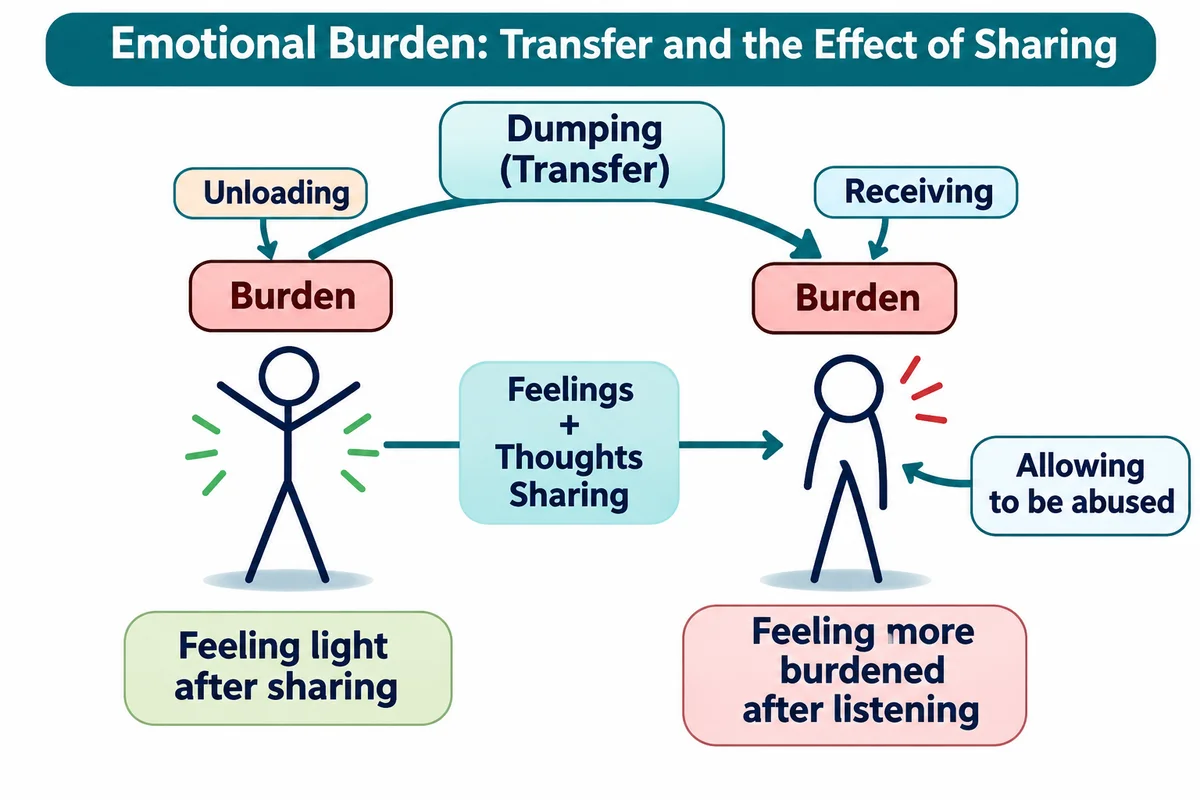
The person who was carrying the original problem has experienced relief by expressing it. However, the person who listened may now be carrying some of that emotional weight. They may begin thinking about the situation, worrying about the person, wondering how things will turn out, and feeling responsible for finding solutions. They may continue processing the conversation long after the other person has moved on with their day. The speaker has returned to their routine feeling lighter, while the listener may carry the conversation into their own life. This is particularly concerning when the listener already has personal difficulties, responsibilities, and emotional struggles of their own.
Imagine someone who listens to their spouse's worries every evening, their children's frustrations throughout the day, their friends' relationship problems whenever they meet, and their relatives' difficulties whenever they call. They may genuinely care about every one of these people. They may also believe that listening is their responsibility because they are trusted and loved. But who is listening to them? Who is helping them process the emotional weight they have accumulated? And how much of their own emotional energy remains after accommodating everyone else's difficulties?
The Irony of Being Everyone's Confidant
There is an interesting psychological dimension to the person who becomes everyone's favorite confidant. Some people take considerable pride in being the person everyone approaches with their problems. They feel valued because people trust them, confide in them, and seek their advice.
They may describe themselves as understanding, strong, compassionate, or emotionally available. They may even believe that being able to absorb everyone's difficulties demonstrates their emotional maturity. However, they may not recognize that they are gradually neglecting their own emotional needs. They listen to everyone's disappointments, absorb everyone's frustrations, worry about everyone's circumstances, and feel responsible for everyone's well-being. They may mistake being needed for being emotionally healthy. Being everyone's emotional support system does not necessarily mean having a healthy emotional support system of your own. In fact, some of these individuals may find it extremely difficult to say no when someone approaches them with a problem. They may feel guilty about refusing to listen, even when they are emotionally exhausted. Their willingness to help becomes an expectation, both for themselves and for the people around them.
How the Cycle Encourages Repetition
What makes this pattern particularly difficult to recognize is that both individuals may unknowingly encourage it. The person sharing experiences relief and appreciates the listener. The listener experiences satisfaction from being helpful and appreciated. The speaker is encouraged to return whenever another burden accumulates. The listener is encouraged to receive more because being needed provides a sense of importance and emotional fulfillment. Neither necessarily recognizes the consequences. The speaker may become increasingly dependent on the listener for emotional relief, while the listener continues accumulating difficulties that they are neither trained nor equipped to process. Over time, the listener may experience emotional exhaustion, anxiety, irritability, helplessness, and even resentment. They may become overwhelmed by situations they cannot control or resolve. The irony is that one person is becoming lighter by making another person heavier, and both may believe that something healthy is happening.
Sharing Is Not the Same as Unloading
This does not mean that we should stop sharing our problems with people we love. Healthy relationships require openness, vulnerability, empathy, and mutual support. There is, however, a difference between healthy sharing and repeatedly unloading emotional distress.
Healthy sharing allows both individuals to participate. It respects the listener's capacity, encourages understanding, and does not make another person responsible for our emotional well-being. Emotional unloading, on the other hand, is often driven by the immediate need to release accumulated pressure. The person may be so occupied with expressing their distress that they become unaware of the emotional capacity of the person listening.
The distinction is not simply how much we talk or how often we seek support. Sometimes a person going through a serious crisis needs considerable support from loved ones. The important consideration is whether support is mutual, appropriate, and respectful of individual boundaries. We must also recognize that listening to someone does not automatically mean accepting responsibility for resolving their difficulties.
The Importance of Professional Counselling
This is where professional counselling becomes particularly valuable. Our loved ones may care deeply about us, but caring and professional competence are two different things. A professional counselor provides a structured and confidential environment where individuals can express, examine, and understand their emotional experiences. The objective is not simply to provide a place to unload problems. It is to help individuals identify patterns, understand their emotional responses, examine underlying beliefs, and develop healthier ways of managing their difficulties.
A counsellor helps individuals work towards emotional understanding and personal responsibility rather than becoming dependent on someone else for continuous relief. This does not replace the importance of family and friendship. It helps preserve those relationships by recognizing when a difficulty requires professional attention.
Learning to Respect Emotional Boundaries
We need to understand that love does not require us to become containers for one another's unresolved emotional problems. We can listen without taking ownership. We can show compassion without becoming responsible for everything. We can support someone without sacrificing our own emotional well-being. Similarly, when we seek support, we must recognize that the person listening has a life, responsibilities, and emotional needs of their own. Sometimes the most considerate thing we can do is ask whether the other person has the time and emotional capacity to listen. And sometimes the most responsible thing we can do is seek professional help.
A Final Thought
Before feeling relieved that someone has listened to your problems, consider whether you have merely transferred some of your emotional weight onto their shoulders. And before feeling proud that everyone comes to you with their problems, consider what you are accumulating while helping them feel lighter.
Being trusted does not automatically make you emotionally equipped to carry someone else's problems. Being needed does not necessarily mean you are emotionally healthy. And loving someone does not mean you must carry everything they cannot manage.
Healthy relationships should provide support, understanding, and companionship, not become permanent destinations for the transfer of unresolved emotional burdens. We must learn to share our lives without making others responsible for carrying them.