Awareness and Education as Foundations for Lasting Change
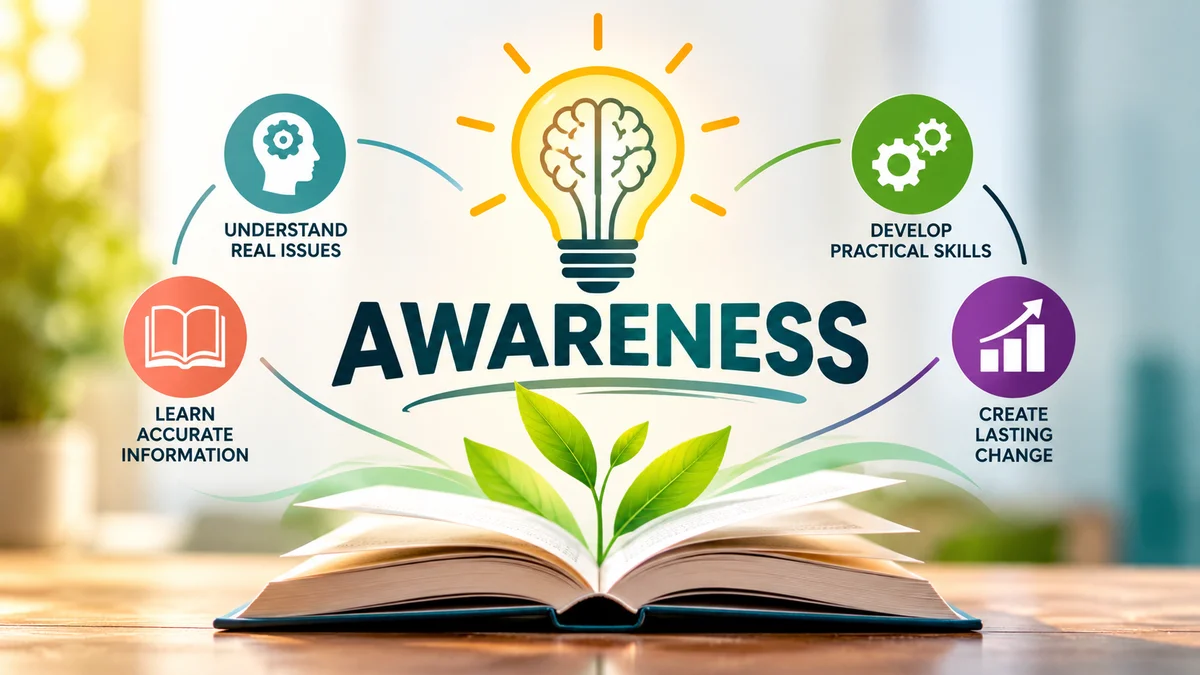
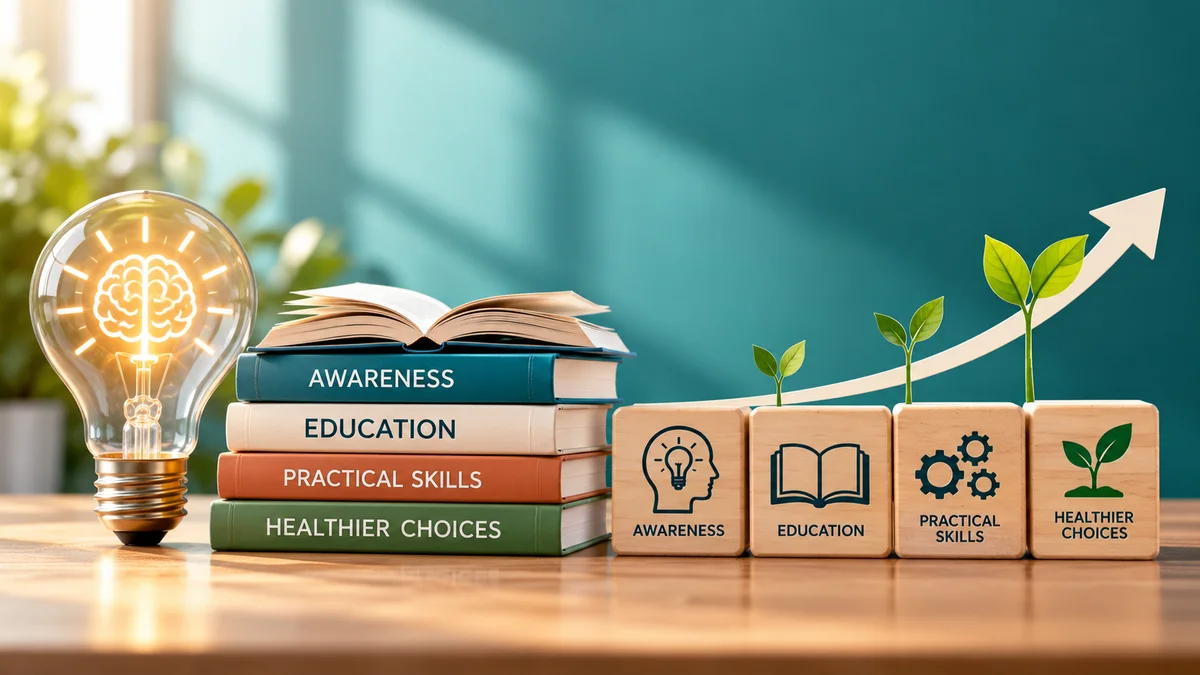
Change begins when we understand. It grows when we learn. And it becomes meaningful when we put that learning into practice.
Many of the challenges we face as individuals, families, and communities are made more difficult by a lack of awareness and understanding.
Misconceptions about addiction can prevent people from seeking help. Limited understanding of emotional health can make it difficult to manage stress and relationships. A lack of self-awareness can cause us to repeat habits and behaviors that interfere with our personal growth.
In many situations, people do not necessarily lack the desire to change. They may lack the information, practical skills, or guidance needed to begin.
This is why awareness and education matter.
At MS Holistic Services, we believe that providing accurate information, encouraging reflection, and helping people develop practical skills are important steps toward healthier choices and meaningful personal change.
1. Awareness Is the Beginning of Understanding
We cannot address a problem effectively if we do not understand it.
Awareness helps us recognize issues that may previously have been misunderstood, overlooked, or dismissed. It encourages us to examine our assumptions, ask questions, and consider information that may challenge our existing beliefs.
For example, a person may believe that addiction is simply a lack of willpower. Learning about the biological, psychological, and social factors involved in addiction can provide a more accurate understanding and encourage a more constructive response.
Similarly, someone may believe that emotional strength means never expressing sadness or fear. Learning about emotional health can help them understand that recognizing and managing emotions is more constructive than simply suppressing them.
Awareness does not solve every problem. However, it creates an opportunity to recognize problems more clearly and consider appropriate ways of responding.
Awareness helps us see what needs attention. Education helps us understand what we can do about it.
2. Education Turns Awareness into Knowledge
Becoming aware of a problem is an important first step, but awareness alone may not be enough.
Knowing that addiction can harm health and relationships does not automatically explain how recovery works or how families can respond constructively.
Recognizing that stress affects emotional well-being does not necessarily teach us how to manage difficult situations.
Understanding that communication is important does not automatically equip us to handle disagreements effectively.
Education bridges this gap by providing relevant information, explaining concepts, and introducing practical strategies.
Well-designed educational programs can help people:
Understand the causes and consequences of important personal and social issues.
Distinguish reliable information from common misconceptions.
Recognize behaviors and situations that may require attention.
Develop practical skills for everyday challenges.
Identify appropriate sources of support.
Make more informed decisions.
Education gives people a foundation on which they can build their understanding and develop more constructive responses.
3. Why Addiction Awareness Matters
Addiction affects individuals, families, workplaces, and communities. Yet, misunderstandings about addiction can create stigma and prevent people from seeking appropriate help.
Some people believe that addiction affects only certain kinds of individuals. Others assume that someone can overcome it simply by deciding to stop.
These beliefs overlook the complexity of addictive behaviors and the different factors that can contribute to them.
Addiction awareness can help people understand the risks associated with substance use, recognize warning signs, and learn about treatment and recovery options.
It can also help families understand how to support a loved one without ignoring harmful behavior or neglecting their own safety and well-being.
For young people, age-appropriate awareness education can encourage informed decision-making, resistance to harmful social pressure, and earlier recognition of risks.
The objective is not to frighten or shame people. It is to provide accurate information, encourage responsible choices, reduce stigma, and make it easier for people to seek help when needed.
4. Emotional Health Education Helps Us Understand Ourselves
Emotions influence how we think, communicate, make decisions, and respond to other people.
However, many people have never received structured education about recognizing emotions, understanding emotional reactions, or developing healthier coping skills.
Without these skills, everyday challenges can sometimes lead to unnecessary conflict, impulsive decisions, or unhelpful coping patterns.
Emotional health education can help people understand the relationship between thoughts, feelings, and behavior.
It can introduce practical skills such as
Recognizing and naming emotions.
Identifying situations that trigger strong reactions.
Responding to stress more constructively.
Communicating needs and concerns respectfully.
Listening to different perspectives.
Developing empathy and emotional awareness.
Recognizing when professional support may be needed.
These skills can be useful in family life, education, employment, and personal relationships.
Emotional health education does not mean that we will never experience difficult emotions. It helps us develop a better understanding of those emotions and practise healthier ways of responding.
5. Personal Development Begins with Self-Awareness
Personal growth involves more than learning new information or setting ambitious goals.
It also requires an honest understanding of our strengths, limitations, habits, attitudes, and patterns of behavior.
A person may want to become more confident but avoid situations that require them to speak up. Another may want healthier relationships but struggle to listen when someone disagrees with them.
In such situations, awareness helps identify the gap between the change a person wants and the behaviors that may be preventing progress.
Personal development education can encourage people to reflect on their habits, strengthen communication skills, develop confidence, and take responsibility for their choices.
The purpose is not to make people feel inadequate. It is to help them recognize opportunities for growth and identify practical steps they can take.
Small changes, consistently practiced, can gradually become part of everyday life.
6. Why Workshops Are an Effective Way to Learn
Workshops provide opportunities to explore important subjects in a structured and engaging environment.
Unlike simply reading an article or watching a video, a well-designed workshop can include discussion, practical exercises, reflection, demonstrations, and opportunities to ask questions.
Participants can connect new information with real-life situations and consider how they might apply what they have learned.
Depending on the subject, a workshop may include:
Guided learning: Introducing key concepts and explaining important information.
Group discussion: Encouraging participants to examine different perspectives and clarify misunderstandings.
Practical exercises: Helping participants practice communication, decision-making, emotional awareness, or other relevant skills.
Reflection: Giving participants an opportunity to consider their own experiences, attitudes, and habits.
Action planning: Helping participants identify realistic steps they can take after the program.
Workshops can also help organizations and communities address common concerns using a shared educational approach.
The value of a workshop lies not simply in the information presented but in how effectively participants understand it and apply it afterward.
7. Awareness Must Lead to Practical Action
It is possible to attend a workshop, learn something valuable, and return to everyday routines without changing anything.
This does not mean the learning was useless. It means that applying new knowledge often requires additional effort.
Consider someone who learns about healthy communication. The next step is to practise listening carefully, expressing concerns respectfully, and handling disagreements more constructively.
Someone who attends an addiction awareness session may need to learn where to seek professional assessment or how to support a person who is struggling.
Someone who learns about emotional health may benefit from practicing reflection, identifying stress triggers, and developing healthier coping strategies.
The transition from knowledge to action can be strengthened by:
Identifying one important lesson from the learning experience.
Deciding how that lesson applies to a real-life situation.
Choosing one practical action to take.
Reviewing the result and identifying what was learned.
Continuing to practise and adjusting when necessary.
Lasting change rarely comes from information alone. It develops when understanding is followed by meaningful action and consistent practice.
8. The Role of Families, Schools, Workplaces, and Communities
Awareness and education are not the responsibility of one individual or organization alone.
Families influence the attitudes and habits that develop during childhood. Schools provide opportunities to learn about health, relationships, decision-making, and personal responsibility. Workplaces can encourage respectful communication and awareness of well-being. Community organizations can help people access reliable information and appropriate support.
Educational programs can contribute to these efforts by creating opportunities for people to discuss important issues, question misconceptions, and learn practical skills.
The needs of each group will differ. A program for students may focus on age-appropriate prevention and decision-making. A workplace session may address communication and emotional well-being. A community program may focus on addiction awareness and available support.
Effective education respects the audience, uses clear and accurate information, and encourages constructive participation.
9. Awareness and Education Are Ongoing Processes
Learning does not end when a workshop finishes.
Our circumstances change. We face new responsibilities, relationships, challenges, and decisions. We may need to revisit what we have learned and develop new skills as our needs evolve.
Ongoing education helps us remain open to new information and examine assumptions that may no longer be useful.
It also reminds us that personal growth is not a competition. Different people learn at different rates, and meaningful change may require time, practice, and additional support.
The goal is not to know everything. It is to remain willing to learn, reflect, and improve.
Building Awareness and Inspiring Change with MS Holistic Services
At MS Holistic Services, our Workshops & Awareness Programs focus on educational sessions related to addiction awareness, emotional health, personal development, and related topics.
Our aim is to help individuals and groups develop a clearer understanding of important issues, challenge misconceptions, and explore practical ways of responding to everyday challenges.
Depending on the subject and audience, programs can encourage discussion, reflection, informed decision-making, and the application of useful skills.
We believe that education is most valuable when it helps people move beyond simply hearing information and begin considering how that information can make a difference in their lives.
Awareness can open the door to understanding. Education can provide direction. Practical action can help turn that understanding into meaningful progress.
Take the First Step Towards Greater Awareness
Whether you are an individual seeking personal growth, an organization interested in educational sessions, or a community group looking to address important issues, awareness and education can provide a valuable starting point.
Contact MS Holistic Services to enquire about our Workshops & Awareness Programs and discuss the topics and format that may suit your needs.
MS Holistic Services — Building Awareness. Creating Change.